Case Study
Farenah Luxury
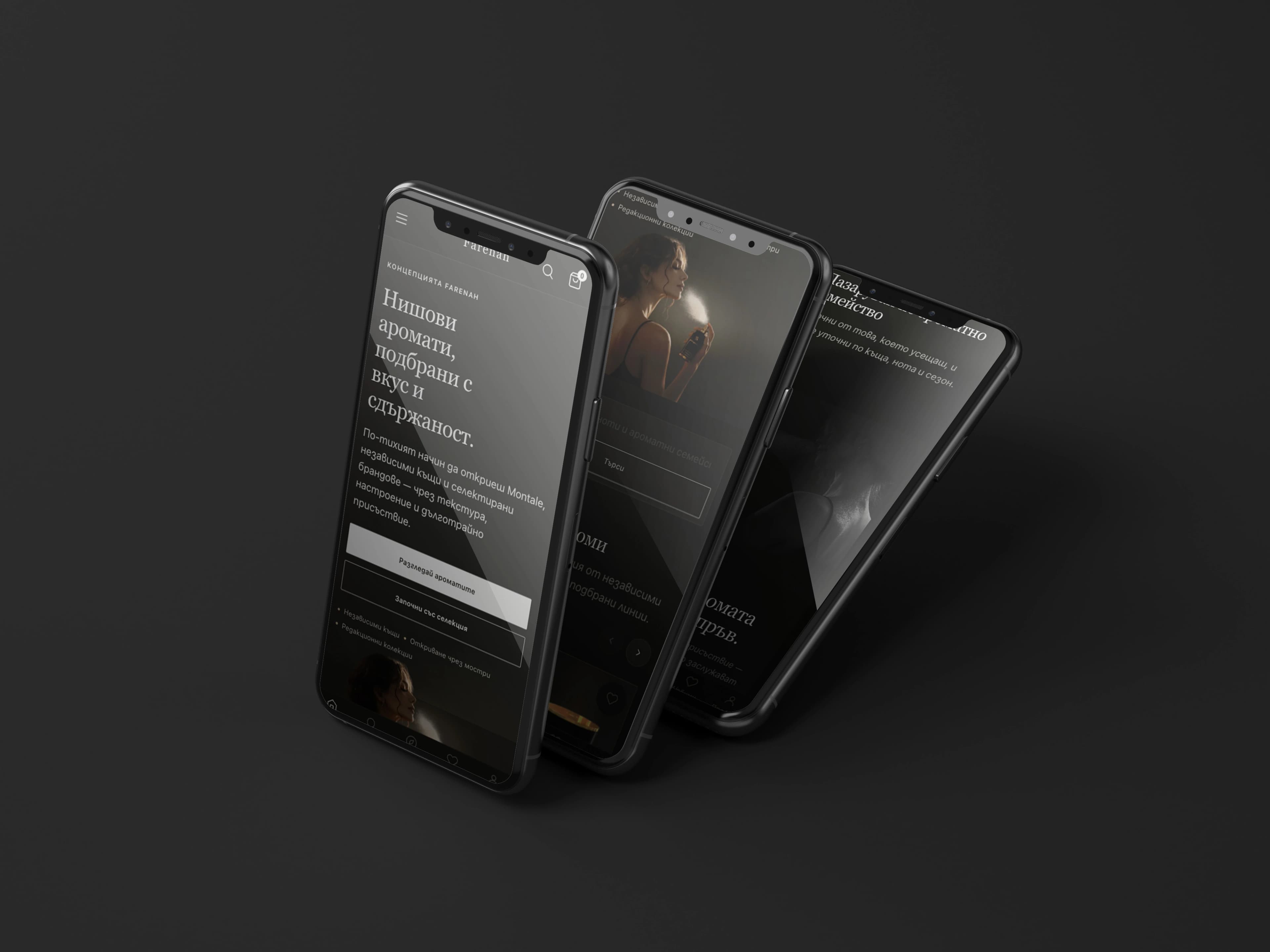
A responsive e-commerce product designed and built from scratch, combining a customer-facing perfume storefront with authenticated accounts and custom administration tooling.
Quick facts
- Year
- 2026
- Project type
- Client project
- Role
- Product design and end-to-end development
Context
Farenah Luxury required more than a static storefront. The product needed to present a catalog organized around products, brands, and collections; support customer account and shopping flows; and give the client a practical way to maintain store data and content after launch.
Challenge
The central challenge was connecting the customer-facing and operational sides of the product. Storefront browsing, filtering, search, accounts, wishlist behavior, and the shopping flow all depended on structured catalog data, while administration required authenticated, role-protected workflows for managing that data without routine developer intervention.
Role & responsibilities
I owned the product delivery from UX/UI concept through implementation, data integration, deployment, and client handoff.
- Defined the UX/UI concept and customer-facing product experience.
- Implemented the responsive storefront with Next.js and TypeScript.
- Integrated Firebase Authentication and Firestore into the application architecture.
- Built the custom administration system and role-based access model.
- Deployed the application to Vercel and trained the client to operate the admin tooling.
Product architecture
Next.js and TypeScript formed the application foundation. Firestore provided the data layer for the store catalog and content, while Firebase Authentication supported customer accounts and protected access to administration features.
This architecture connected two distinct product surfaces: the public storefront used by customers and the administration workflows used by the client. Vercel provided the deployment environment for the finished application.
Storefront experience
The storefront includes product and brand pages, collections, filtering, search, user accounts, a wishlist, and the complete shopping flow. Together, these features turn the catalog into an application customers can browse and use rather than a fixed set of promotional pages.
Authentication & accounts
Firebase Authentication supports user accounts and the application’s authenticated areas. The product includes wishlist functionality for customers, while role-based access separates administrative capabilities from standard account access.
Data & administration
The custom admin panel allows the client to manage products, brands, collections, and store content. These workflows operate on the Firestore-backed product data used by the application and are protected through authentication and role-based permissions.
The operational goal was explicit: routine catalog and content changes should be manageable by the client without editing code or depending on a developer for every update.
Delivery & handoff
The application was deployed to Vercel. After launch, I trained the client to use the custom administration system so that ongoing store operations could be handled independently.
Outcomes
- Delivered a live e-commerce application with storefront, account, wishlist, and shopping flows.
- Delivered a role-protected administration system through which the client can independently manage products, brands, collections, and store content.
Technologies
- Next.js
- TypeScript
- Firebase Authentication
- Firestore
- Vercel